
Psychotherapy for people who feel everything.
Like the sound of a precisely tuned instrument practiced with skill in just the right environment, the gifts of the empath and highly sensitive person can be exquisite.
Sentient instruments that offer a wide range of information, your feelings are incredibly valuable indicators of the conditions that enable all living beings to feel safe and thrive.
To the empath or highly sensitive person, it can feel like you are constantly experiencing the world in high definition with the volume on max. Whether empathic by nature or sensitized by trauma, there are times when your body may feel like a tuning fork resonating with the energy around you.
A system that processes more information isn’t necessarily broken. Sometimes it’s just overwhelmed by the volume of input.
Without safety in your external and internal environment, a heightened experience of the world can lead to flooding:
Not to mention the litany of physical ailments that arise from a chronically overstimulated central nervous system.
Your gift needs special care for you, your work and your relationships to thrive.
Learn to transform your vulnerabilities into your most valuable assets.
Empaths and highly sensitive people (HSP) share a deep responsiveness to energy, emotion, and environment. All empaths are highly sensitive people, but not all HSP are empaths.
HSP may notice and feel affected by subtle shifts and emotional cues, while the empath absorbs and carries others’ feelings in their own body.
You may be an empath if you leave crowded places feeling drained, pick up on unspoken emotions, or sometimes struggle to know where your feelings end and others’ begin.
Empaths tend to be intuitive and tuned in to the transpersonal — sensing the subtle emotional undercurrents that transcend individual psychology. The ability to perceive shifts in the emotional and energetic climate of a culture or population begins to reveal how sensitivity is not just vulnerability, but strength.
If you relate to emotional intensity, intuition, or frequent overwhelm in stimulating environments, you may identify as an HSP, an empath, or both.
Human emotions are the only realm in which a more sensitive tool is a more suspect one.
In almost every other domain, increased sensitivity is desirable.
A more sensitive scientific instrument is generally considered superior.
Then we get to human beings.
Suddenly the person who notices more nuances in facial expression, relational dynamics, emotional tone, unspoken tension, symbolic meaning, and shifts in attachment gets treated as though their perception is faulty.
Why would we assume the more sensitive sensor is less accurate?
Rather than a defective instrument, perhaps what we’re encountering is a powerful capacity that needs careful handling to minimize the noise and refine the signal.
Exploring your intuition. Answering the call. Discovering what really matters.
Therapy for Empaths and Highly Sensitive People in San Francisco.
Attuned to your inner world with precision, care & exquisite sensitivity.
If you’re an empath or highly sensitive person or who senses what others are feeling on an energetic, intuitive and somatic level, this can make it difficult to:
A therapist for empaths located in San Francisco near Potrero Hill, I can help you transform heightened emotional experiences into pathways to insight, resilience, and personal growth.
Rather than treating sensitivity as a pathology, I understand it as an information-processing capacity.
In session, we’ll draw on somatic therapy for nervous system regulation, psychodynamic therapy for clarity and depth of insight, and dialectical behavioral therapy for coping strategies.
Sensitivity is not the problem. The question is how to understand and integrate the wealth of sensory and perceptual information you receive.
Balancing Emotion with Reason
Therapy for the empath or highly sensitive person who is chronically overstimulated by their environment involves balancing attunement with containment.
The goal of therapy is learning to tolerate an expanded emotional range while anchoring in your own resilience so you can stay with your experience rather than flee it, and maintain sovereign ground rather than drowning in overwhelm.
A somatic approach to therapy can help you learn to manage emotional flooding, overstimulation and hyperarousal. In session, you’ll learning to resource yourself by practicing grounding, emotion regulation, and self-soothing skills so you can stay connected to your emotions without getting flooded.
An empath therapist can help you clarify your experience, strengthen your boundaries, and honor your unique gifts.
Heightened sensitivity to light, sound, and energy is common for empathic people who experience porous boundaries in socially complex environments.
Describing the energetics of the subtle body is a PhD dissertation. In reality, you may just be trying to understand why Costco makes you cry.
If fluorescent lighting, bulk paper towels, and 400 carts grazing your peripheral vision makes your soul briefly leave your body, there’s a strong chance you are a highly sensitive person.
Costco is basically:
For someone with sensory processing sensitivity or empathic absorption, that’s not “just a store.” It’s 47 emotional radio stations playing at once while someone hands you a 48-pack of oat milk.
In the absence of a healthy degree of differentiation, it’s easy for an empath or highly sensitive person to feel emotionally flooded and overstimulated by the world around them.
Unhealthy coping habits such as:
are short term solutions to quieting a central nervous system that is suffering from chronic hyperarousal and dysregulation.
Naturally attuned to their environment, an empath feels more — living with heightened sensitivity and an often overwhelming inner experience.
It’s understandable to want to turn down the noise, especially for empathic citydwellers in San Francisco and Los Angeles, urban environments where it is easy to feel constantly overstimulated by the hum of the city without any opportunity to return to baseline.
Often, the same sensitivity that makes empaths more attuned also indicates a vulnerability to addiction. If you’re highly sensitive and have found yourself relying on substances to numb or cope, addiction therapy for empaths is a private, one-on-one approach to recovery designed to honor your inner witness so you can see clearly and learn to trust your intuition.
Incorporating elements of mindfulness and balancing radical acceptance with a willingness to change, Dialectical Behavior Therapy (DBT) can be a powerful and effective treatment for self-destructive behaviors arising from challenges with impulse control.
Therapy can help you integrate emotion and reason so you can reside in your wise mind, rather choosing to “be more rational” at the expense of your felt sense.
Insight gained in therapy for empaths brings a new depth of awareness that is the first step in a dialectic between acceptance and change in DBT therapy.
Using mindfulness techniques to increase access to your own inner wisdom can help you:
The ability to self-regulate and set healthy boundaries are two of the ways to improve how you relate to the world that can have lasting impact on the quality of your life and personal relationships.
The goal of therapy for empaths is to inhabit the place where acceptance meets change by:
If you’ve wondered about Borderline Personality Disorder, but suspect something deeper is at play, take a look at the BPD Quiz.
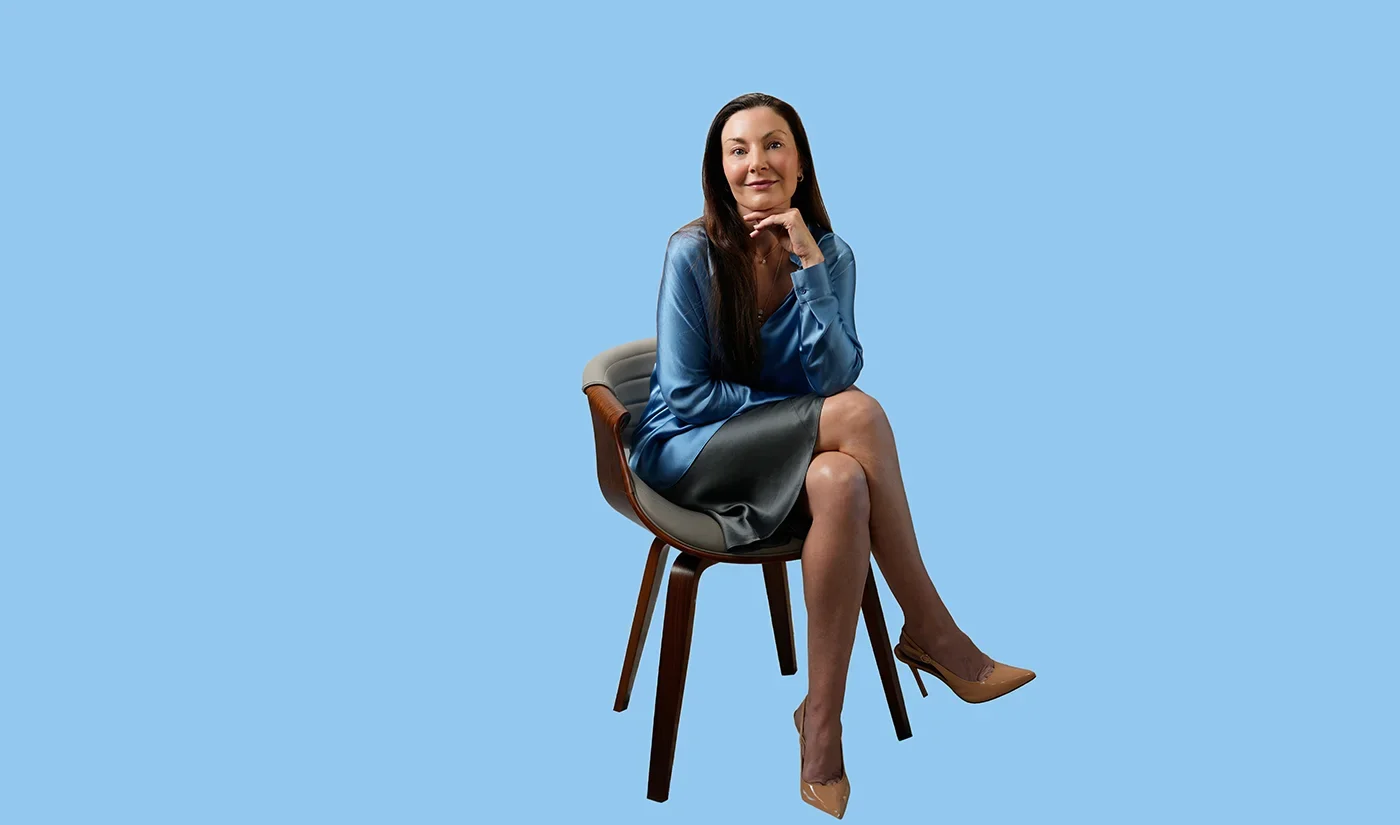
Marla Leigh Caplan, LMFT, specializes in therapy for empaths; artists, writers, and creatives; thinkers, scientists, and innovators — creative people who are deeply affected by the world and whose sensitivities are the source of both their virtue and their vice.
You deserve to feel things deeply without being deeply shaken. The world needs your gifts.
Therapy for empaths supports clients throughout California, from the Bay Area to Los Angeles.
If you are seeking therapy for empaths in San Francisco, I invite you to join me for in-person therapy in Potrero Hill, where we can meet face-to-face without a screen in a calm, quiet space away from the crowds.
Sensitivity with containment. Emotion without overwhelm.
Held in an urban oasis of calm.